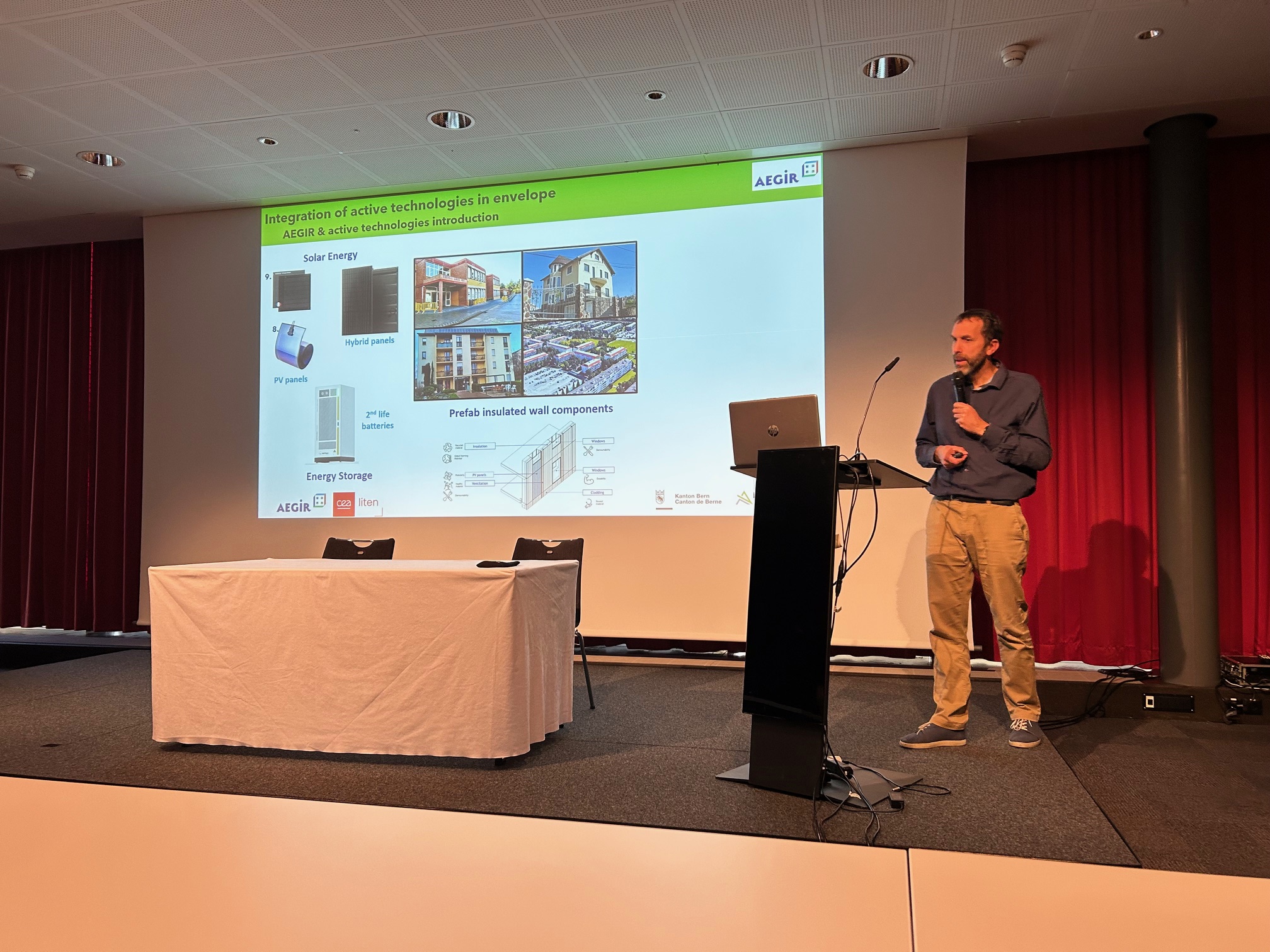
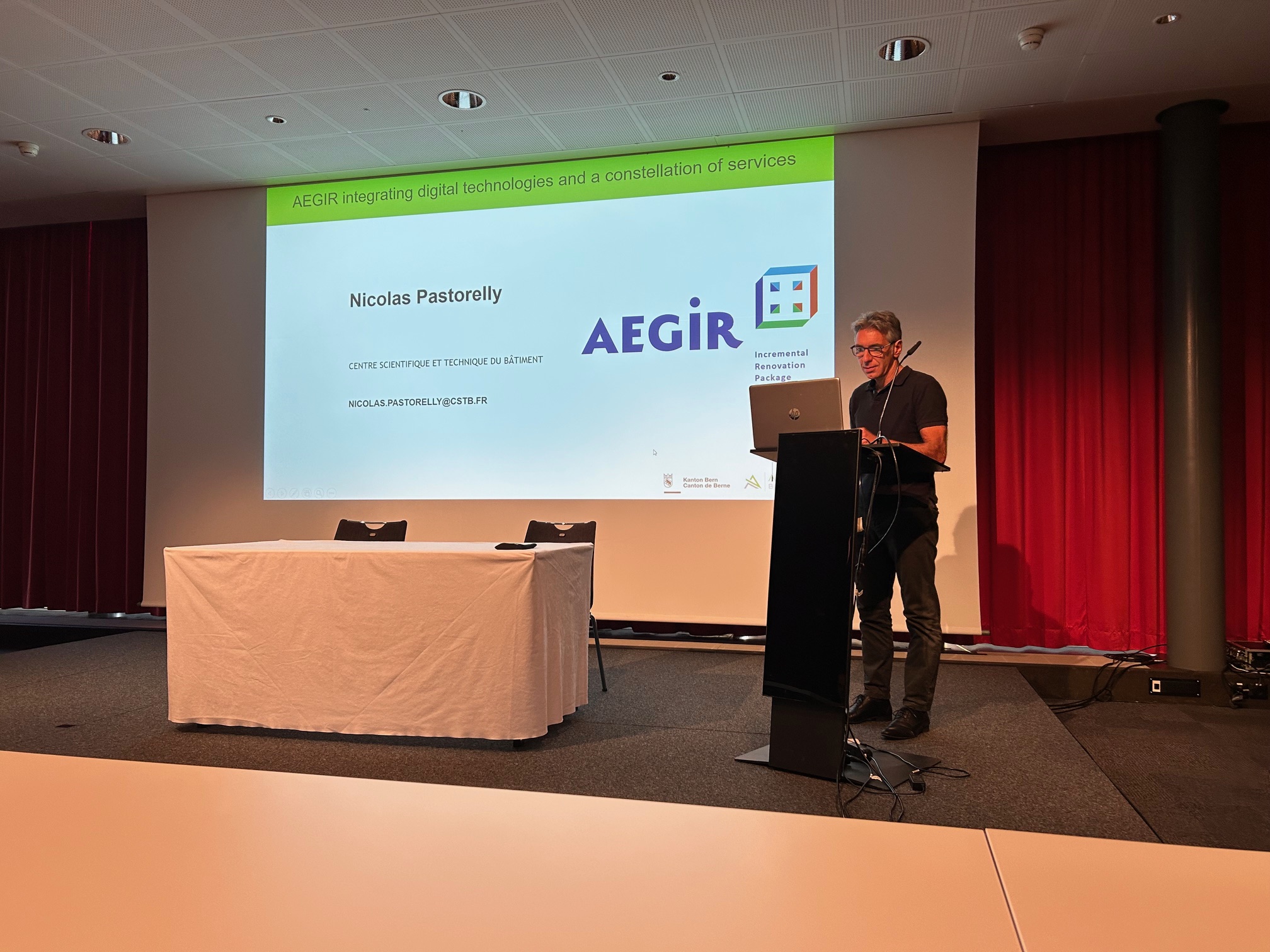
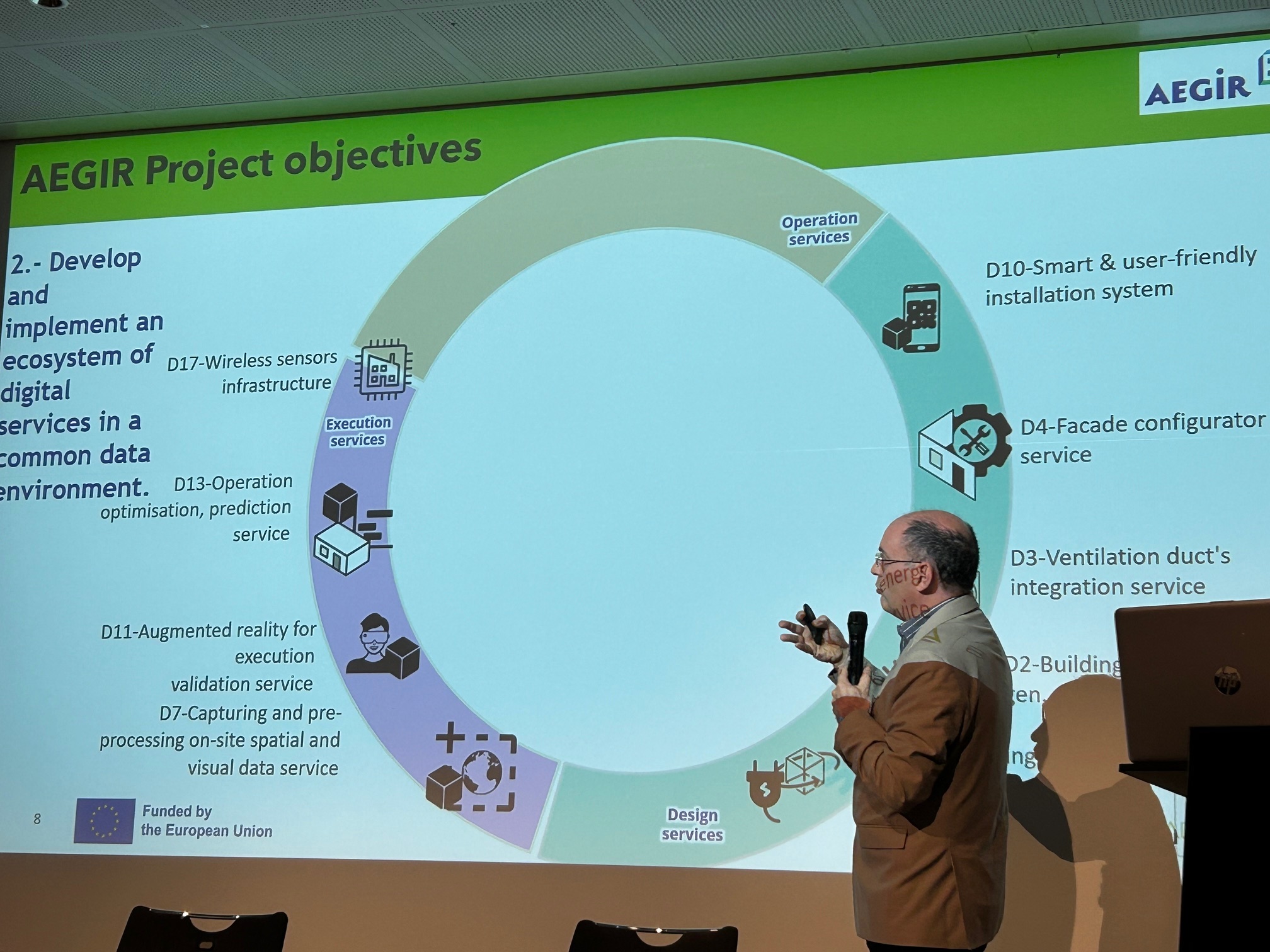
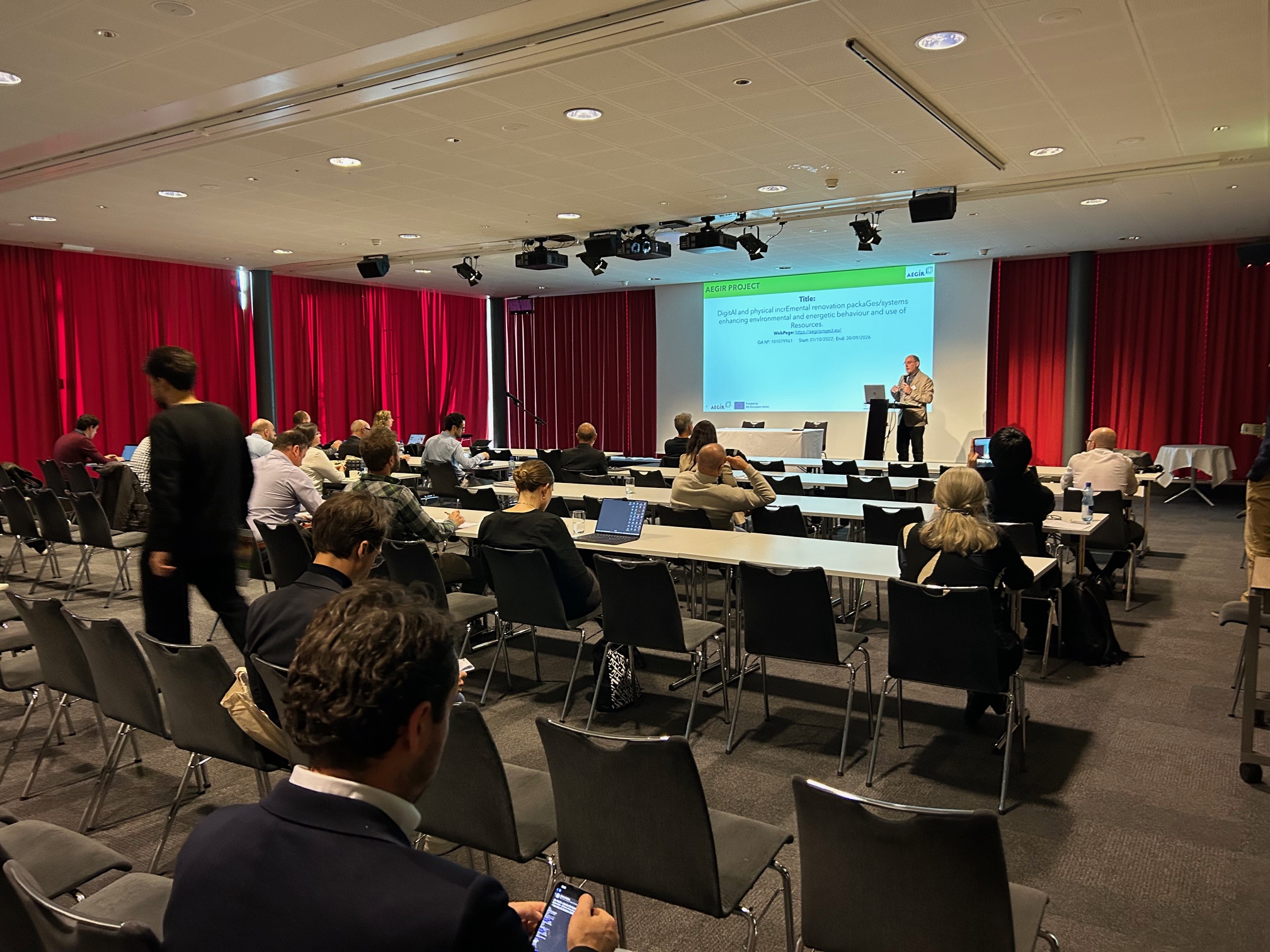
The International Advanced Building Skins Conference & Expo took place on 3–4 November 2025 in Bern, Switzerland. Advanced Building Skins is one of the key international conferences dedicated to high-performance building envelopes. It brings together architects, engineers, researchers, and industry partners to exchange knowledge on topics such as circular façades, integrated energy systems, and industrialized retrofit. Within this context, AEGIR contributed a design-led perspective on how standardized façade systems can still respond meaningfully to climate, use, and context.
At Advanced Building Skins 2025, AEGIR presented how façade retrofit can move beyond one-off solutions and become a scalable, design-driven system. Drawing from the 4 AEGIR demo sites, the presentation highlighted the Spanish site as a focused example, showing how architectural decisions grounded in performance data and engineering input translate into buildable, legible, and adaptable façade solutions for real buildings.
Several AEGIR partners collaborated to deliver a session titled “Scaling Up Sustainable Renovations – AEGIR Perspectives,” covering a wide range of topics. Their presentations are available for download below.
AEGIR is a modular façade retrofit system developed to upgrade existing buildings with minimal disruption. Rather than treating the façade as a single-layer upgrade, the system combines multiple functions, envelope, ventilation, active windows, insulation, and on-site energy, into a coordinated kit of components. These components are standardized, but not rigid. They can be tuned to different building types, orientations, and climates while maintaining a repeatable construction logic.
Two principles guide the design approach. The first is that architecture is shaped by data. Inputs such as ventilation demand, solar exposure, and indoor comfort targets directly inform the depth, angle, and layout of the façade. The second is standardization with flexibility: a consistent module and interface strategy allows variation where it matters, without reinventing the system each time.
This methodology is tested across several European demo sites. The Spanish demo, a secondary school in Malgrat de Mar near Barcelona, became a key case to show how performance requirements can become architectural drivers rather than constraints.
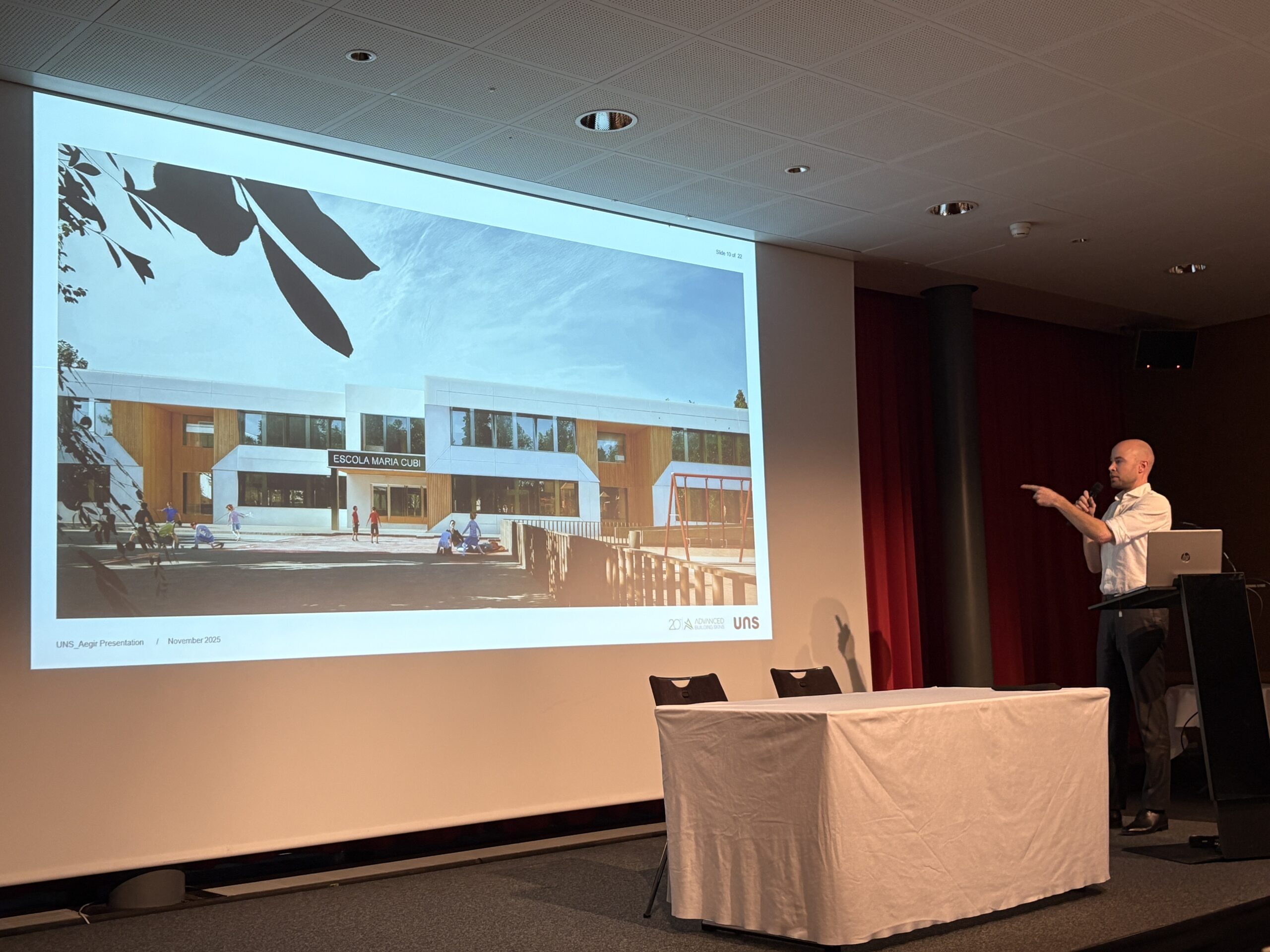
The Marià Cubí i Soler public school building, located in Malgrat de Mar is a typical two-story school building, constructed with a concrete frame and brick infill. It represents a large and repeatable building stock across Southern Europe, where improving indoor climate and reducing energy use is urgent, but where long closures or invasive works are not an option.
From the outset, ventilation was treated as a primary design input. Classrooms require high and reliable air exchange, yet ventilation systems are often hidden, leading to complex detailing and difficult maintenance. In this project, the opposite approach was taken. Together with Fraunhofer, ventilation requirements were translated directly into façade geometry.
Ventilation ducts are integrated into a designed cove on the east and west façades. Rather than being concealed, they are expressed as part of the architectural section. From there, the ducts continue over the roof, where they align structurally and geometrically with the photovoltaic system. This creates a clear, readable relationship between air, energy, and form. It also simplifies installation and access, which is critical in an operational school environment.
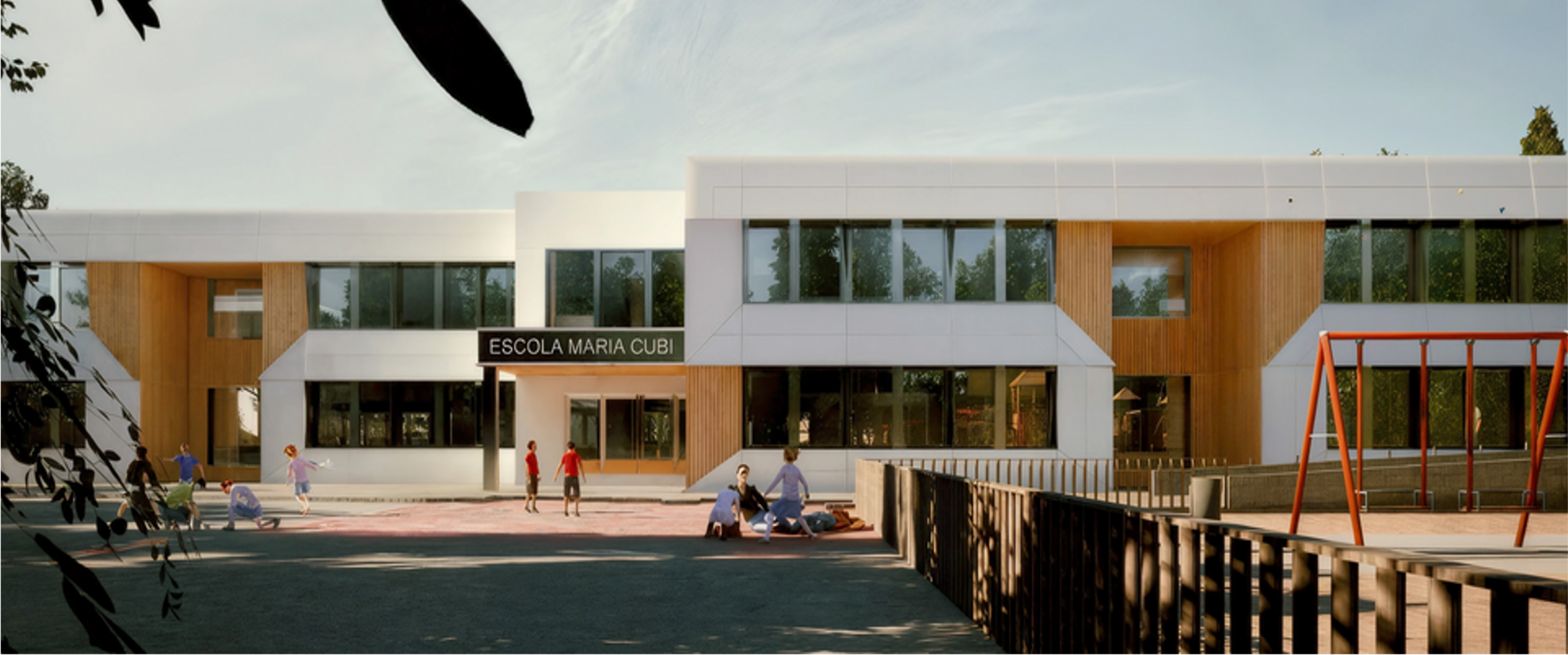
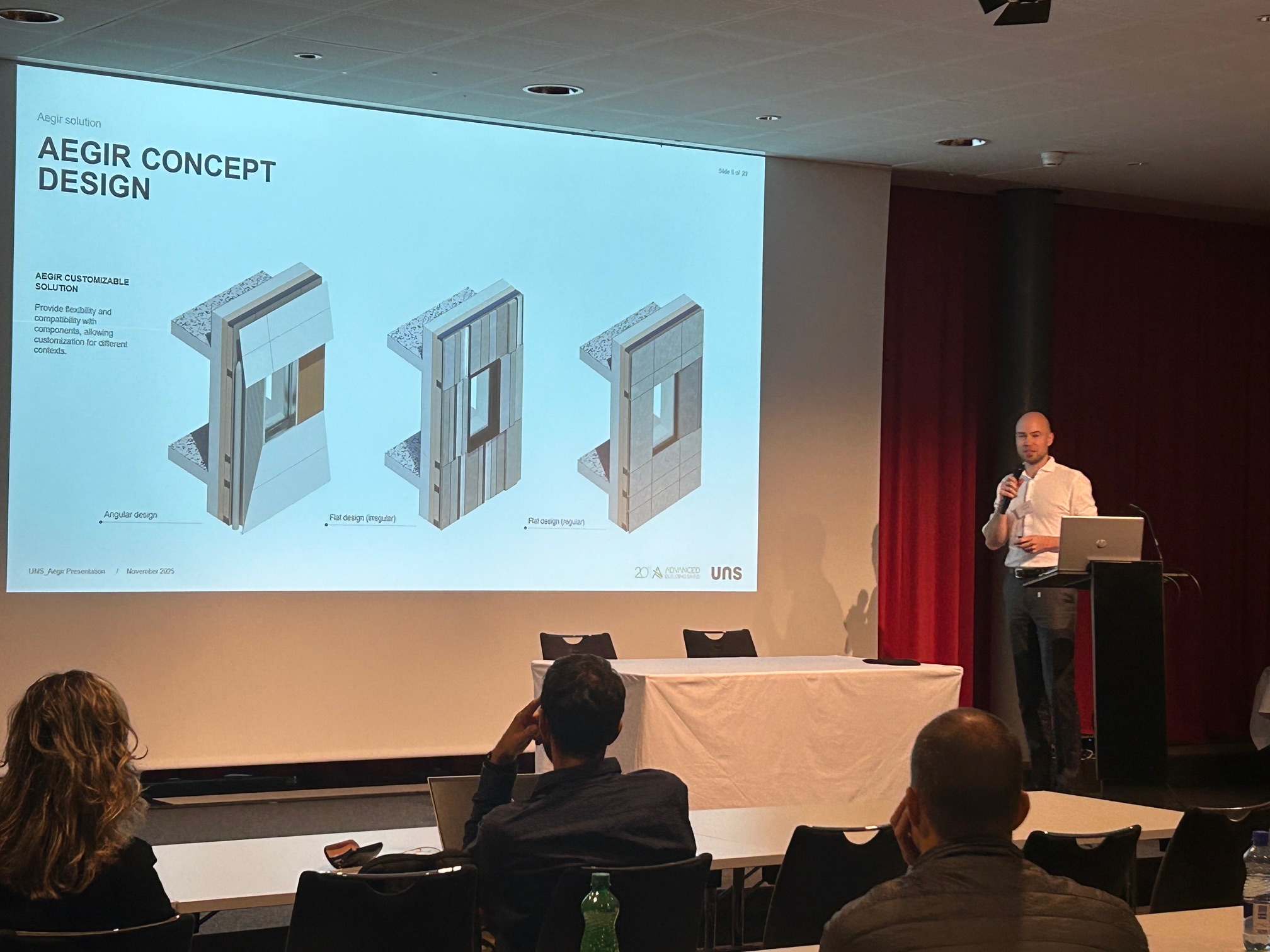
For the Spanish demo, 3 façade design options were developed, all based on the same modular system but tuned differently. The selected solution uses an angular façade profile that responds to orientation and climate. On the South façade, cladding panels are angled to increase self-shading and reduce solar gain, directly improving interior comfort. This strategy was developed together with engineering partner ENAR, ensuring that thermal performance and architectural expression work hand in hand.
The angled geometry also supports daylight control. By carefully adjusting inclination, the façade reduces glare and overheating near windows while maintaining good views and balanced daylight in classrooms. The result is a façade that appears consistent across the building, yet subtly adapts to each orientation.
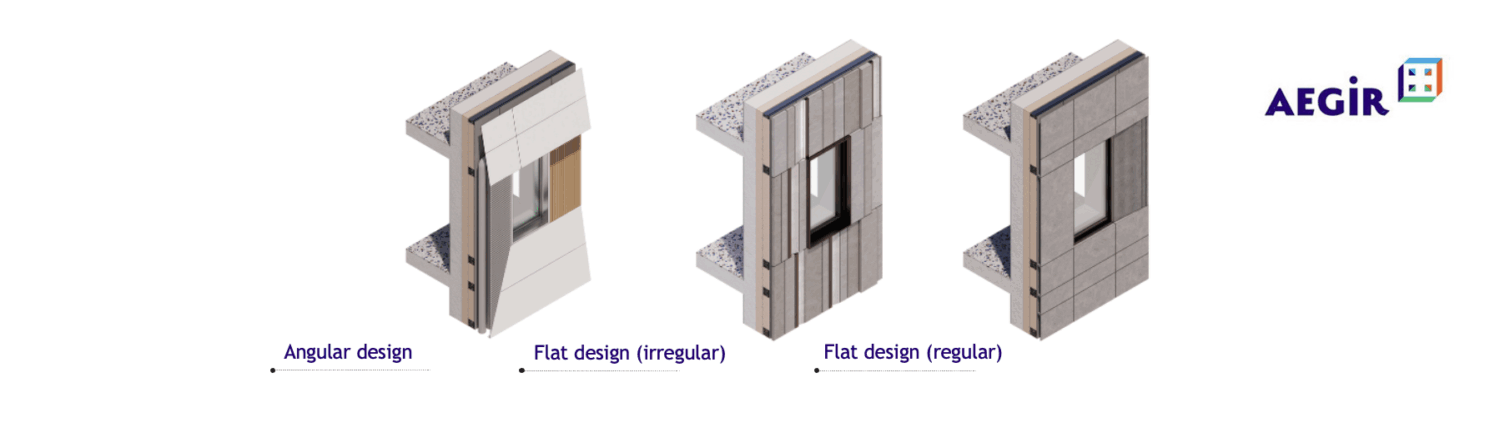
Material choice followed the same logic of performance first. In exposed areas, a durable white ceramic cladding was selected to withstand sun, temperature variation, and intensive use typical of school buildings. In more protected zones, the project introduces a reclaimed material with a strong local connection.
Together with TU Delft, eucalyptus wood reclaimed from Spanish mussel farms was identified and developed as a secondary façade material. This wood, originally used in marine infrastructure, gains a second life as part of the building envelope. Its warm texture contrasts with the ceramic surfaces and adds a tactile quality to the façade, while demonstrating how circular material streams can be meaningfully integrated into architectural design.
Public buildings such as schools offer a particularly effective opportunity to improve energy performance, indoor air quality, and comfort at scale. The challenge is doing so in a way that is repeatable, affordable, and architecturally coherent. AEGIR’s contribution lies in treating the façade as an integrated system rather than a collection of add-ons.
At Advanced Building Skins 2025, the Spanish demo showed how this approach works in practice: a modular façade shaped by ventilation needs, solar logic, and material availability, developed through close collaboration between architects, engineers, and researchers. It is not a one-off solution, but a system designed to be adapted, replicated, and refined across different contexts, turning retrofit into a clear, buildable, and scalable architectural strategy.
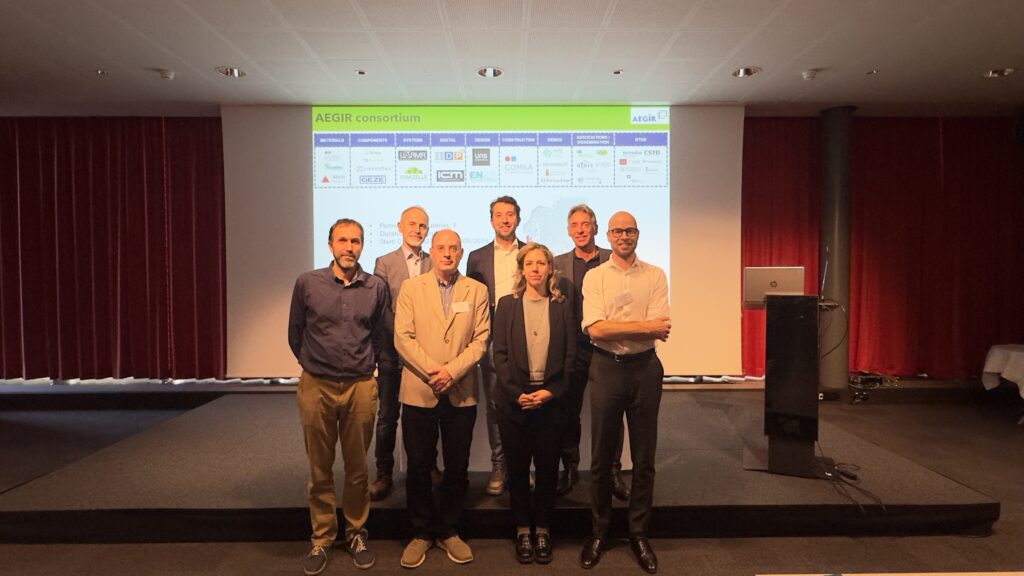
Six project partner organizations each delivered a presentation highlighting their specific area of expertise and involvement in the AEGIR project. The presentations have also been uploaded to Zenodo.
Session Topics:
Sustainable renovations based on solutions coming from the AEGIR project
Julen Astudillo, Tecnalia, San Sebastian, Spain
Modular and digital innovations in sustainable renovations
Tom Minderhoud, UNStudio, Amsterdam, Netherlands
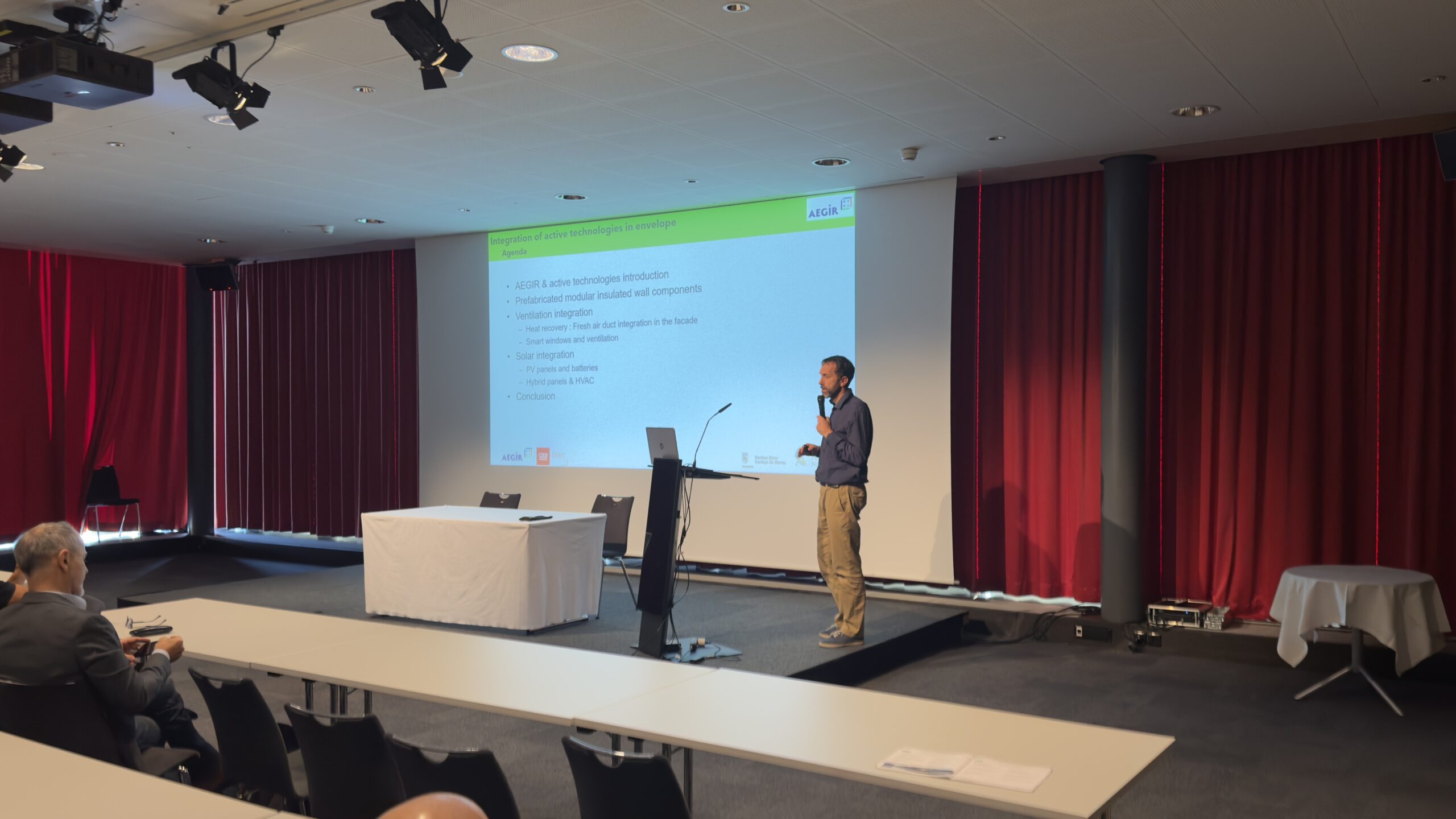
Integration of active technologies in the building envelope
Arnaud Jay, CEA, Tobe Completed, France
Integrating urban mining and reuse strategies in façade renovation
Thaleia Konstantinou, TU Delft, Netherlands
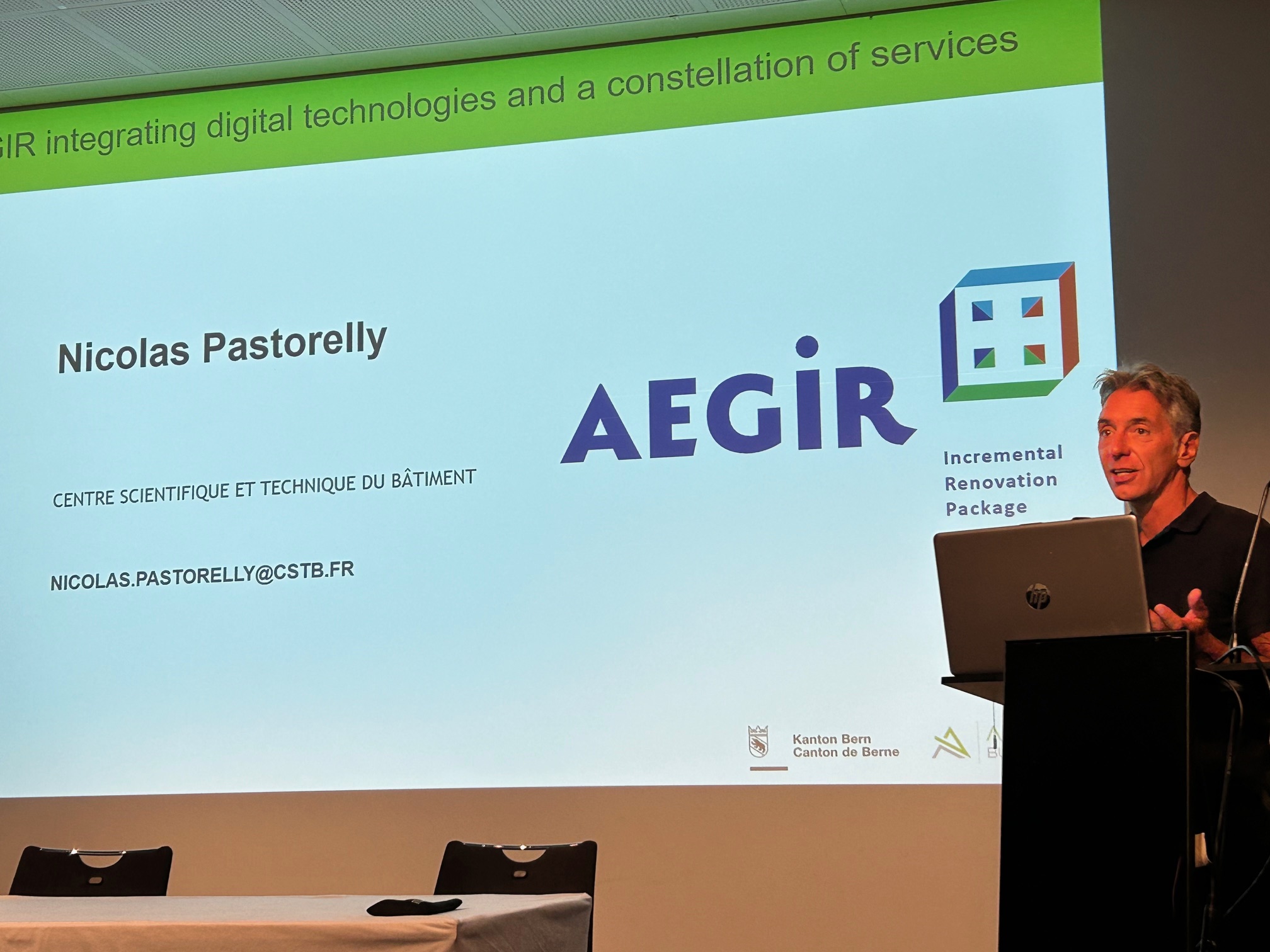
Integrating digital technologies and a constellation of services
Nicolas Pastorelly, CSTB, Sophia Antipolis, France
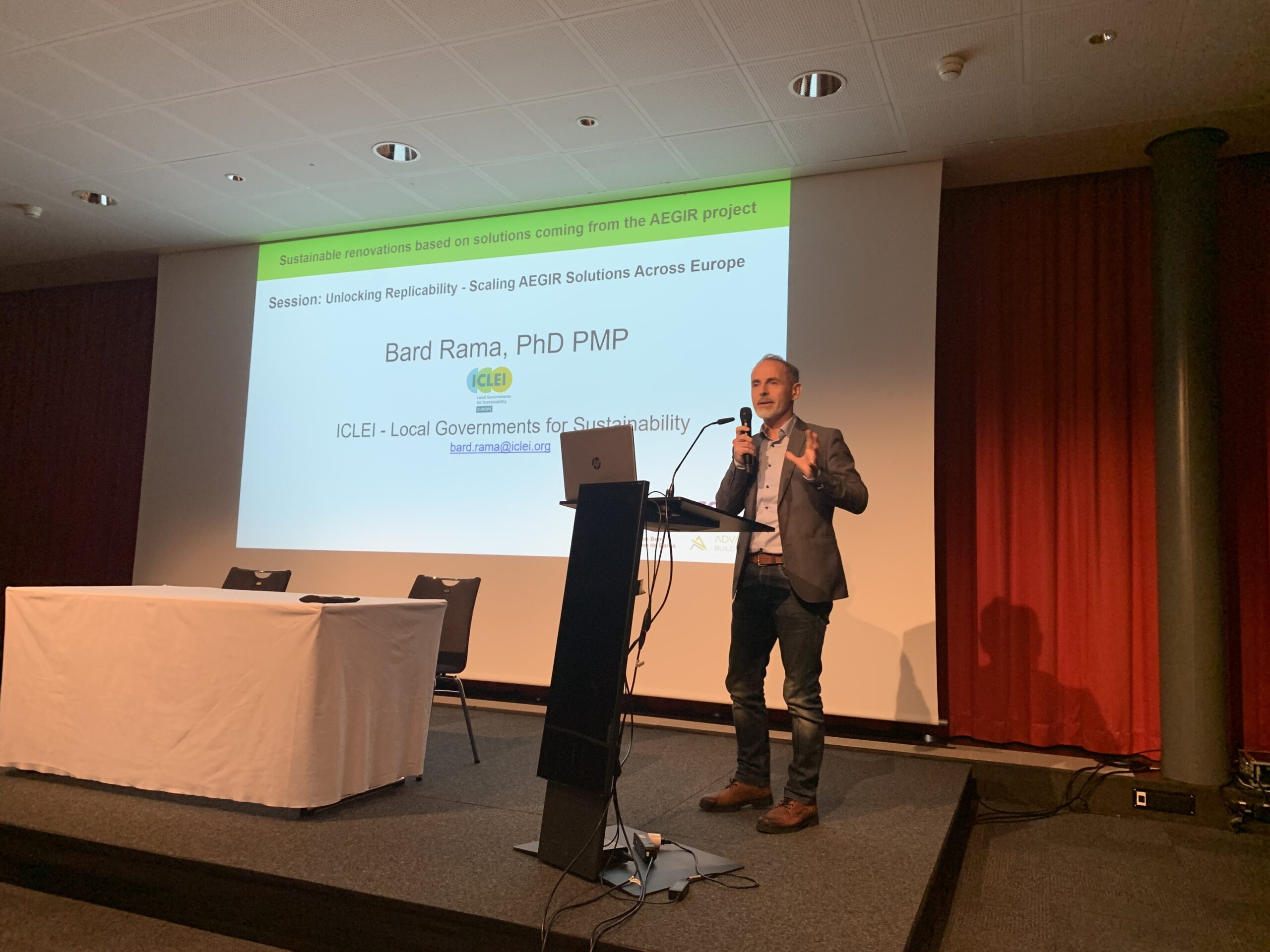
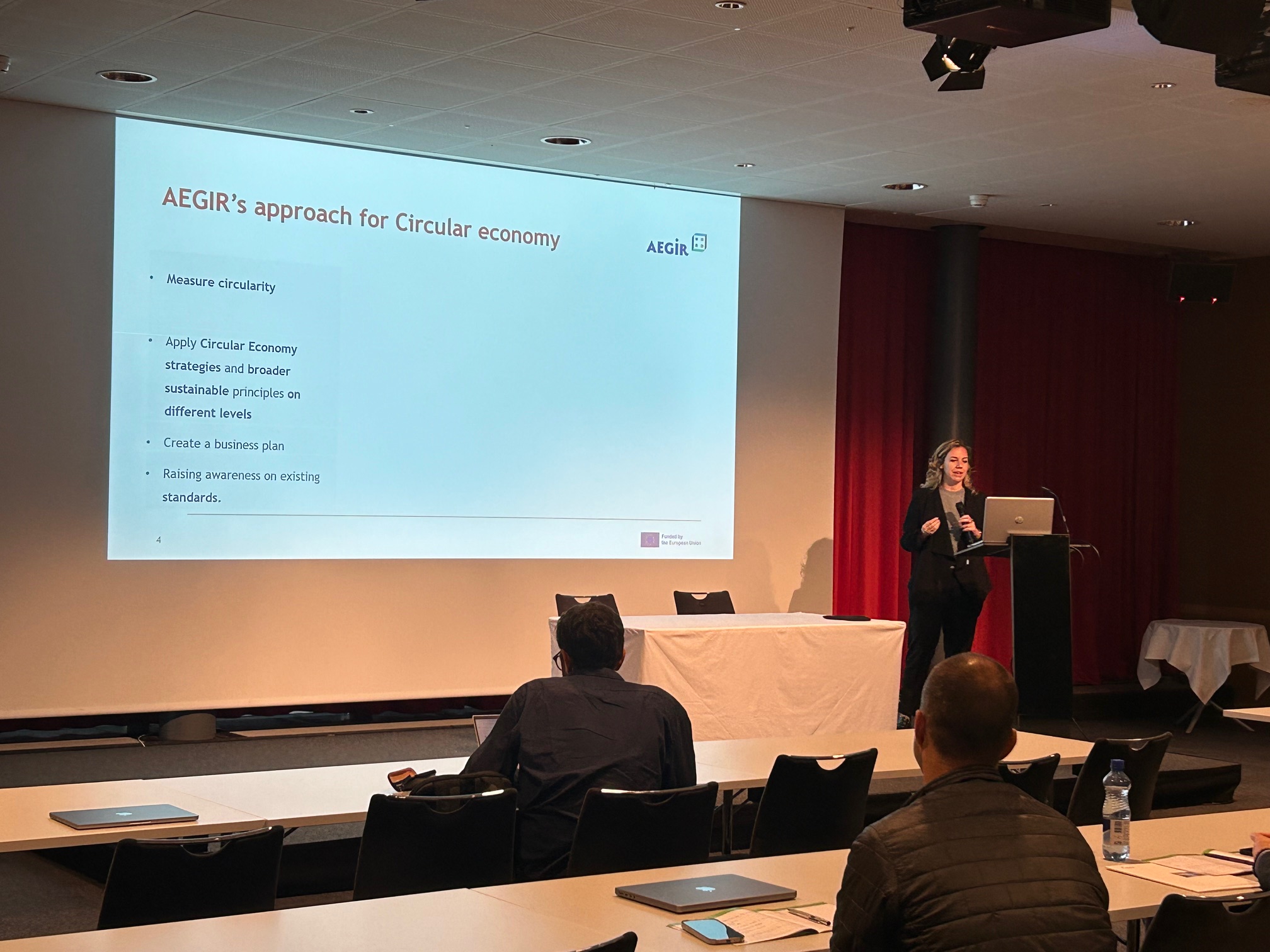
Scaling up sustainable renovations with AEGIR solutions
Bard Rama, ICLEI, Bonn, Germany